A self initiated UX case study.

When Complaints don't go away

Designing a dashboard to surface long-running public service issues using NYC 311 data

A self initiated UX case study.

When Complaints don't go away

Designing a dashboard to surface long-running public service issues using NYC 311 data

A self initiated UX case study.

When Complaints don't go away

Designing a dashboard to surface long-running public service issues using NYC 311 data

My Role:

UI/ UX Design, UX Research, Information Architecture, Prototyping

Platform:

Responsive Web

My Role:

UI/ UX Design, UX Research, Information Architecture, Prototyping

Platform:

Responsive Web

My Role:

UI/ UX Design, UX Research, Information Architecture, Prototyping

Platform:

Responsive Web

01 - The Problem

How might we surface issues that are repeatedly reported at the same locations across New York City, so that agencies can focus on long-running problems rather than trending complaints?

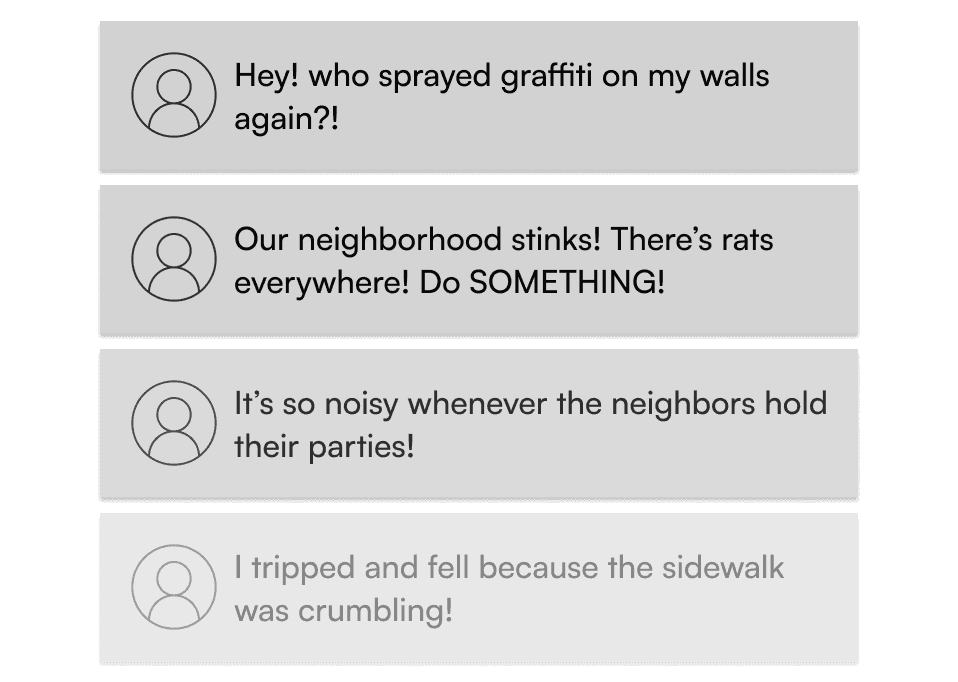
Why this matters: New York City receives millions of 311 service requests every year, covering everything from noise complaints to street conditions and sanitation issues. Most dashboards focus on daily volumes, recent spikes, or what’s trending at the moment.

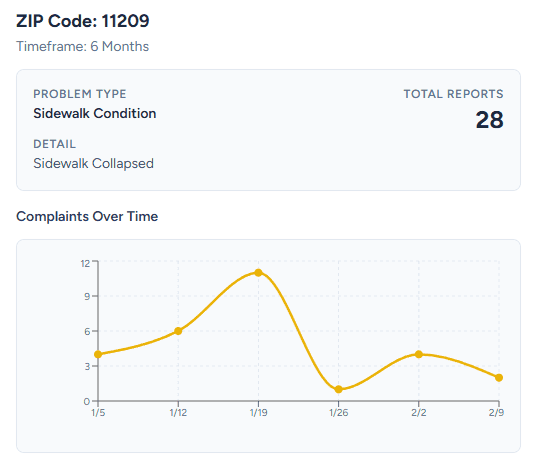
The problem is that some locations generate the same type of complaint repeatedly over months or years. When attention is driven by volume or recency alone, these long-running issues are easy to miss. Looking at complaints over time and by location helps surface where problems persist, where fixes may not be sticking, and where deeper, structural issues need attention.

01 - The Problem

How might we surface issues that are repeatedly reported at the same locations across New York City, so that agencies can focus on long-running problems rather than trending complaints?

Why this matters: New York City receives millions of 311 service requests every year, covering everything from noise complaints to street conditions and sanitation issues. Most dashboards focus on daily volumes, recent spikes, or what’s trending at the moment.

The problem is that some locations generate the same type of complaint repeatedly over months or years. When attention is driven by volume or recency alone, these long-running issues are easy to miss. Looking at complaints over time and by location helps surface where problems persist, where fixes may not be sticking, and where deeper, structural issues need attention.

01 - The Problem

How might we surface issues that are repeatedly reported at the same locations across New York City, so that agencies can focus on long-running problems rather than trending complaints?

Why this matters: New York City receives millions of 311 service requests every year, covering everything from noise complaints to street conditions and sanitation issues. Most dashboards focus on daily volumes, recent spikes, or what’s trending at the moment.

The problem is that some locations generate the same type of complaint repeatedly over months or years. When attention is driven by volume or recency alone, these long-running issues are easy to miss. Looking at complaints over time and by location helps surface where problems persist, where fixes may not be sticking, and where deeper, structural issues need attention.

02 - How I approached the problem

A.

Thinking about who this product is for

This product is meant for government, city councils, operations and planning teams .

Why it matters: This product will give stakeholders visibility on long term repeated issues instead of issues that is occurring now, which helps them to allocate resources to solving them.

B.

Defining what is a persistent issue

I defined a persistent issue as an issue that is:

  • The same issue that occurs repeatedly over time

  • At the same location

Why it matters: Defining what is a persistent issue will determine how data will be filtered, classified and displayed.

C.

Testing the data

Before designing anything I looked for and tested data to see if there are issues that are repeated at the same location. My explorations showed:

New York City has publicly available data to support this use case. Singapore does not.

Why it matters: I pivoted because of data availability and not because of personal preferences.

03 - My Key Decisions and Tradeoffs

Decision

Consequence

  • Switching from the Singapore context to the New York context

As mentioned, I pivoted because my goal to surface out persistent issues can only be done with publicly available data. After investigation, I realized that the data is not available for me to make a product with the same strong use case. However, the same design principles will apply to Singapore if I had access to the same type of data.

The product still showcases the same use case, but showing a different location other than Singapore.

  • I chose to focus on one data source

Because this is meant to be a proof of concept, not a comprehensive product that captures data from all sources.

The product uses one data source, so there might be a risk of not giving agencies the full picture on the situation.

  • I decided to use archived data instead of real time data

It would be beyond the scope of this project to link it up with real-time data. The current dataset is comprehensive enough to demonstrate the use case for this dashboard.

Data might be missing, or agencies might prefer to use real-time data sources.

04 - My constraints

What are the constraints, and why the app works like it is because of those constraints

Constraint

Implications

Archived data instead of online data

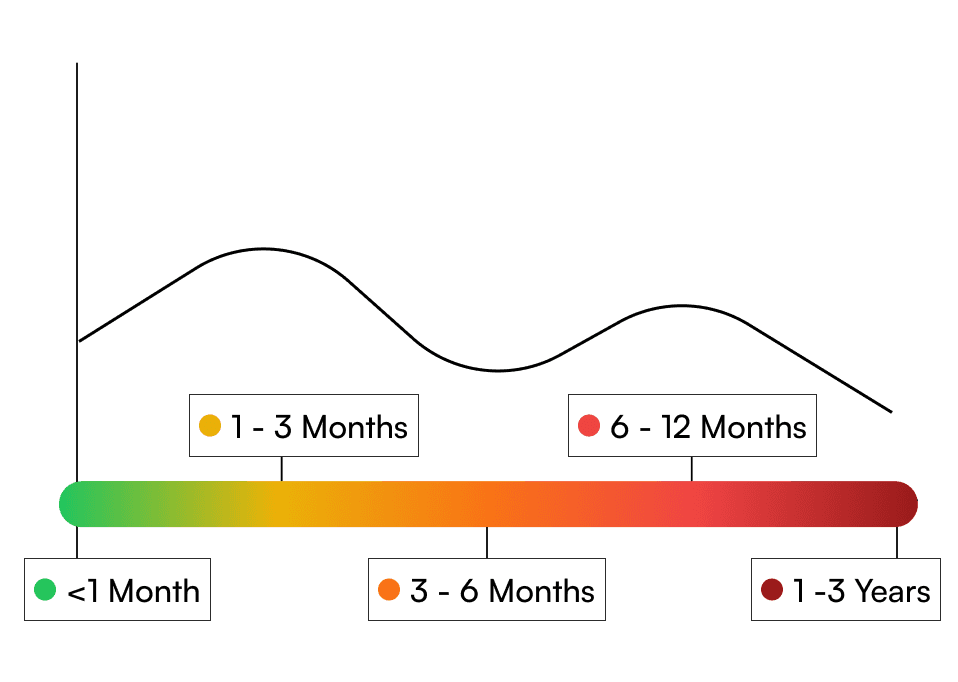
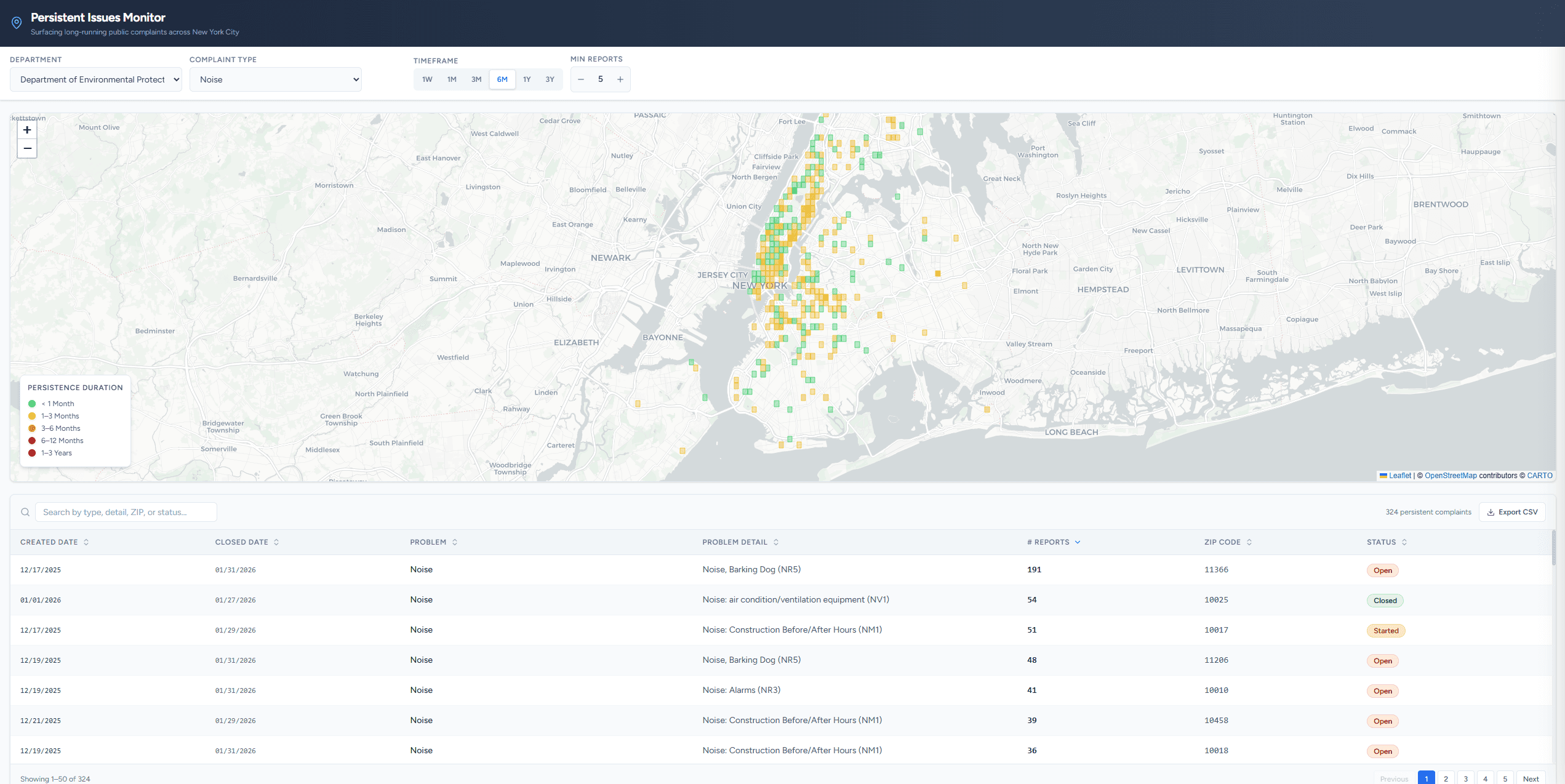
The dashboard has a timeframe and a minimum report threshold to let the user see how many complaints persist over time

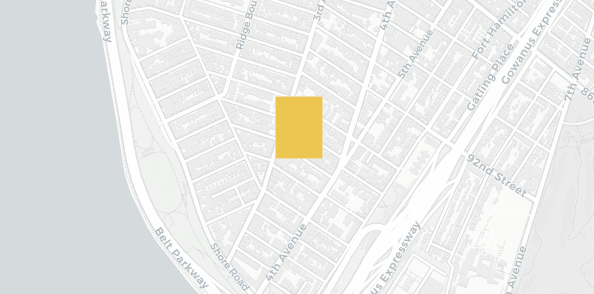
Not pinpointing precise location of the complaints. Privacy concerns led to the decision to show rough locations.

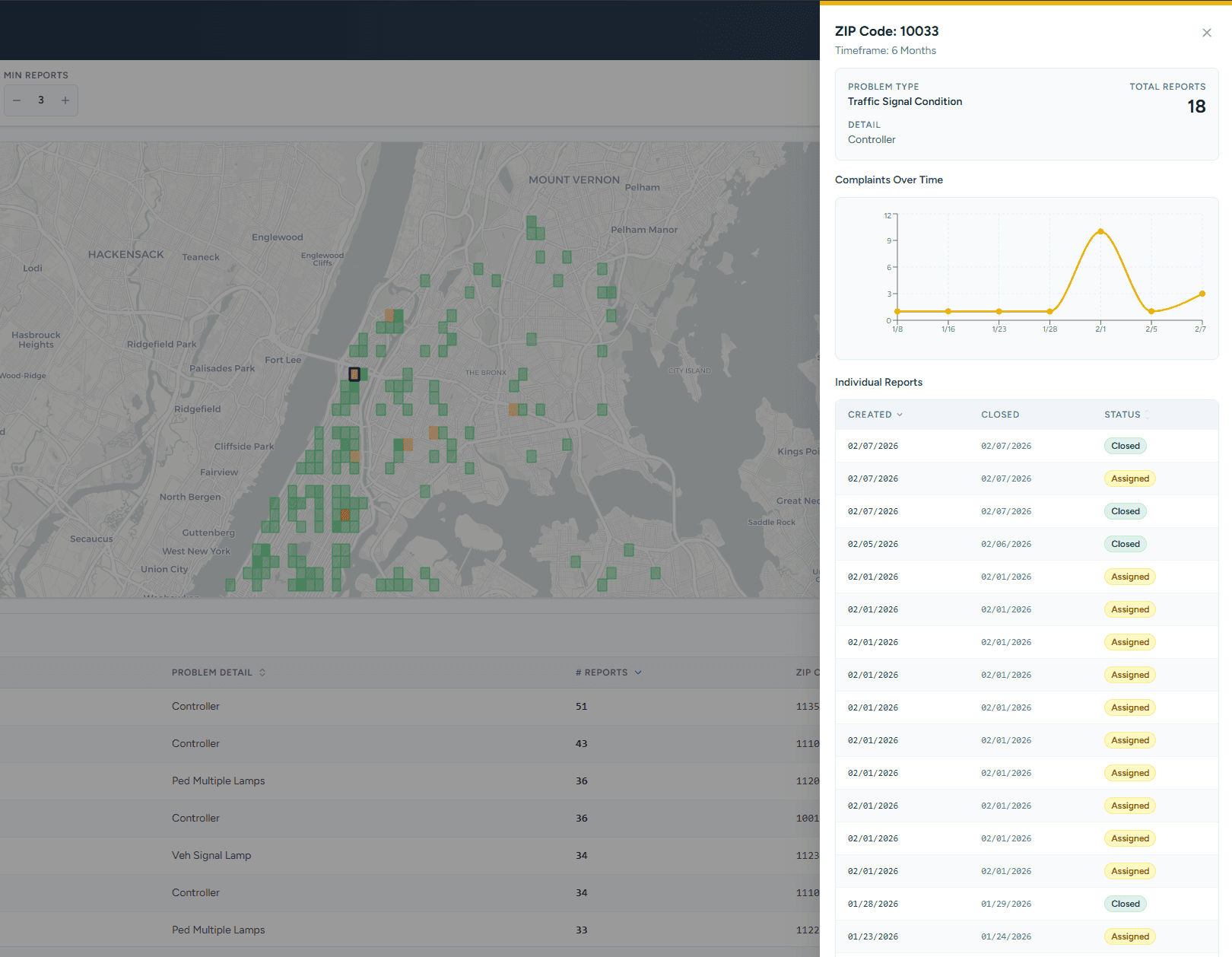
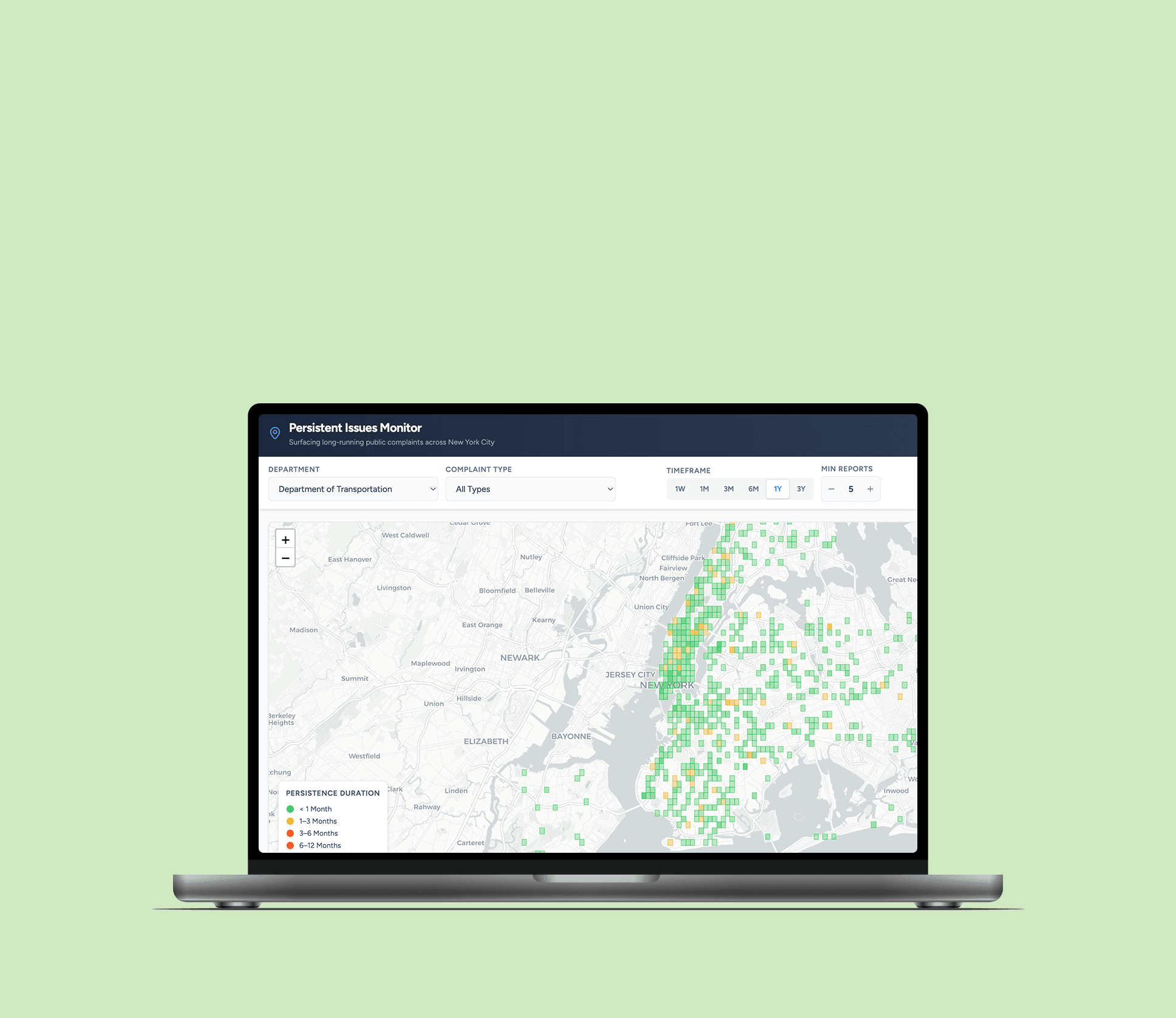
The grid size representation matches a few city blocks which lets agencies still see the patterns of persistent issues but avoids address level precision while still showing where issues concentrate.

Avoiding Zip code representation on the map, but using it on the table

The grid is intended for agencies to analyze and identify a broad surface area. The zip code is meant for reference.

05 - What I Built

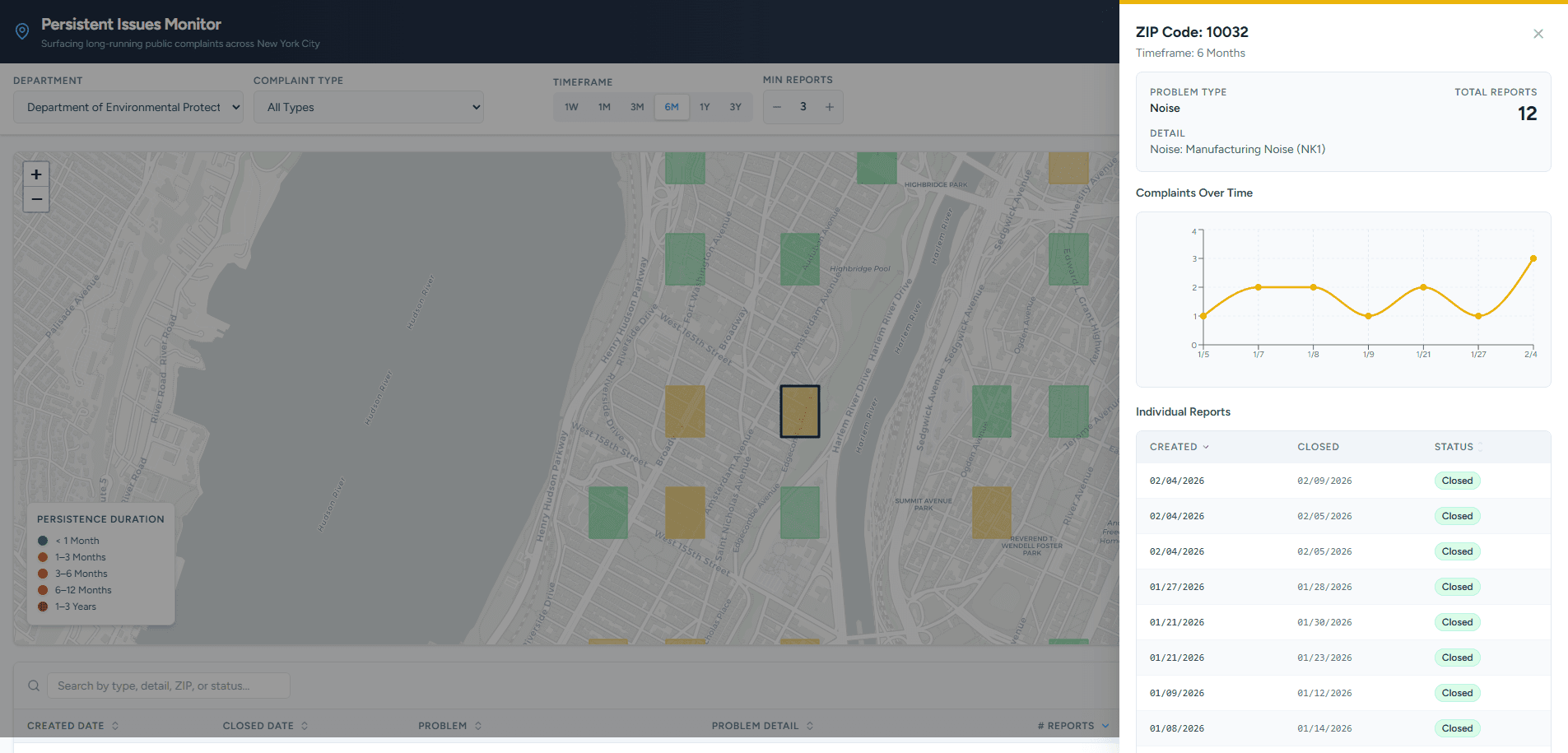
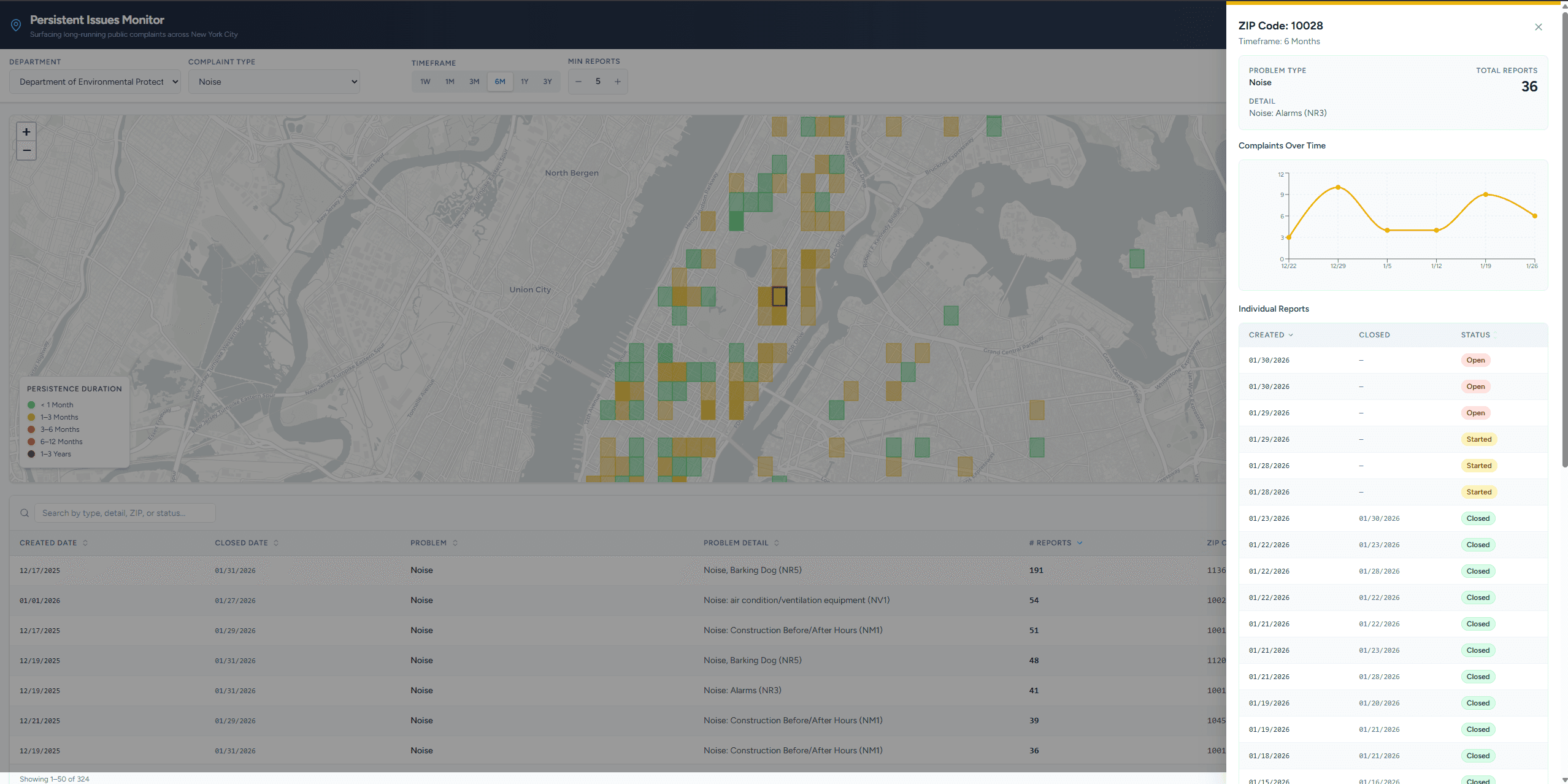
Click on the info icon for annotations. AI was used to speed up prototyping and iteration, and test ideas quickly against real data.

Click on the info icon for annotations. Best viewed on desktop.

To see a full screen version, please use this

To see a full screen version, please use this

07 - Outcomes

  • What the dashboard enables agencies to see - Makes persistent issues visible across time instead of treating these issues as one off events.

  • Makes the agencies ask "why does this issue keep coming back?" instead of "was this issue resolved" when planning and allocating resources.

08 - Reflection

This case study started out as my desire to answer a question: How do agencies look at repeated, long term issues?

What I learnt:
In the course of this project, I was reminded how important it is to test data early to determine feasibility. Doing so led me to pivot the project’s context entirely, because without the right data, the product simply wouldn’t work.

I also learned how easily visual markers can be misinterpreted as pinpoint precision, which led to me using a grid-based representation to alleviate privacy concerns.

08 - Reflection

This case study started out as my desire to answer a question: How do agencies look at repeated, long term issues?

What I learnt:
In the course of this project, I was reminded how important it is to test data early to determine feasibility. Doing so led me to pivot the project’s context entirely, because without the right data, the product simply wouldn’t work.

I also learned how easily visual markers can be misinterpreted as pinpoint precision, which led to me using a grid-based representation to alleviate privacy concerns.

08 - Reflection

This case study started out as my desire to answer a question: How do agencies look at repeated, long term issues?

What I learnt:
In the course of this project, I was reminded how important it is to test data early to determine feasibility. Doing so led me to pivot the project’s context entirely, because without the right data, the product simply wouldn’t work.

I also learned how easily visual markers can be misinterpreted as pinpoint precision, which led to me using a grid-based representation to alleviate privacy concerns.

Ron Ang | 2025 | Crafted with

, powered by Framer

Ron Ang | 2025 | Crafted with

, powered by Framer

Ron Ang | 2025 | Crafted with

, powered by Framer